
14. Building AI Systems Honestly: The Gap Loop, What Works, and the Protocol That Emerged
TL;DR AI-generated code verification is the practical thread running through this 14-article capstone. It connects the platform’s architecture, security, compliance, data, model-risk, threat-modeling, and ISO governance work…

13. ISO 42001 in Practice: Governing AI Systems When the Controls Outpace the Docs
TL;DR ISO 42001 documentation connects AI controls to their purpose, owner, evidence, and review. One self-assessment estimated how much of the technical-control and governance-documentation work was covered:…
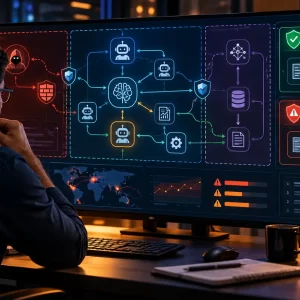
12. Threat Modeling AI Systems: STRIDE, PASTA, and MITRE ATLAS
TL;DR A threat model can document a control and still leave a practical question unanswered: what evidence shows that it works in the system? This article examines…

11. Fairness, Explainability, and Drift — The Last Mile of Production AI Governance
TL;DR Fairness checks compare outcomes across groups. A SHAP explanation estimates how inputs contribute to a score, while drift monitoring tracks changes in data. Using our banking…

9. Synthetic Data Governance for AI: Proving Data Provenance
TL;DR Synthetic data governance for AI comes down to one question: can you prove the data your model saw is the data your generator produced? The question…

8. Data Engineering for AI Agents: Pipelines, Real-Time Sync, and Vector Search
TL;DR Getting a data pipeline right is one job. Data engineering for AI agents is a different job. The agent has to actually consume that pipeline’s output,…

10. Model Risk, Agentic Risk Management, and the Observability Gap
Model Risk, Agentic Risk Management, and the Observability Gap TL;DR We govern our five-agent lending platform in three ways: review scoring models, set limits on what agents…
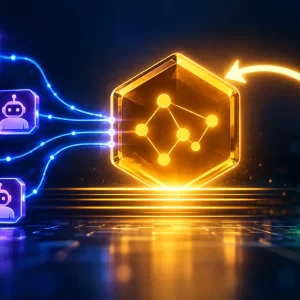
7. Building Real Human-in-the-Loop with LangGraph Checkpointing
TL;DR A review queue with a button looks like human oversight. It isn’t — the automated decision has already taken effect by the time anyone opens that…
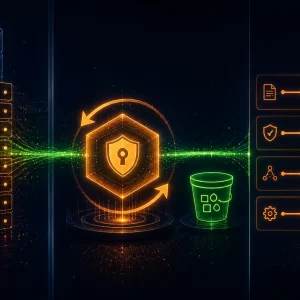
6. Compliance Infrastructure: Audit Trails, Policy-as-Code, and the Append-Only Principle
TL;DR We built three pieces of audit trail architecture for a regulated AI platform: a transactional outbox so an audit event can’t be silently lost between Postgres…
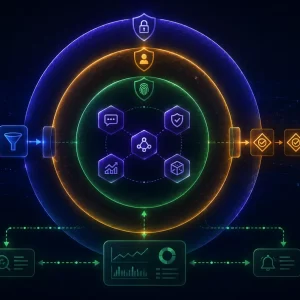
4. Securing Agentic AI: Authentication, Authorization, and PII
TL;DR Our five-agent banking AI platform had OPA wired into exactly one agent. The MCP server had no auth middleware. All five agents shared one API key….