📌 TL;DR
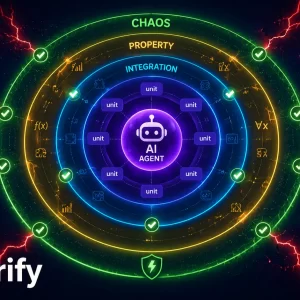
Data quality problems discovered downstream are expensive. Data quality problems discovered at ingestion are just noise to be filtered. The validation architecture in this platform catches both — schema violations, business rule failures, and statistical drift — at the point of entry, while the OpenLineage integration records the provenance of every record so that downstream consumers can trace data back to its origin. This article covers the layered validation strategy, the OpenLineage event model, how FAIR Data Principles shape the metadata architecture, and how GDPR‘s right to explanation is satisfied through lineage tracking.
⏮️ Previous: The Command Center: Building an Internal MCP Server for Agent Coordination → | ⏭️ Next: Proactive Intelligence: Building Alert Systems That Think Ahead →
📖 Series context: In Part 14 — The Command Center: Building an Internal MCP Server, we built the central tool registry and execution engine that enforces OPA policy and produces an audit trail on every agent tool invocation. This article extends the trust model from the agent layer down to the data layer: a layered validation architecture (schema, business rules, statistical drift) that catches quality issues at ingestion, combined with OpenLineage provenance tracking so every record carries a traceable, auditable lineage chain. In Part 16 — Proactive Intelligence: Building Alert Systems That Think Ahead, we close the loop by routing validation anomalies and lineage failures into an intelligent alert system that escalates based on severity and pattern.
💡 Quick stats: 3 validation layers (schema, business rules, statistical) on every batch · columnLineage facet records every PII scrubbing transformation for GDPR audit · OpenMetadata registration is non-blocking — a catalog failure never stops data ingestion
📖 In This Article
- Why Validation Alone Is Not Enough
- The Validation Stage
- Schema Validation
- Business Rules Validation
- Statistical Validation
- Prometheus Metrics for Validation
- OpenLineage: The Provenance Standard
- The LineageRegistryStage
- FAIR Data Principles in Practice
- GDPR Right to Explanation Through Lineage
- OpenMetadata Registration (Non-Blocking)
- Lineage Visualisation in OpenMetadata
- Frequently Asked Questions
- Key Takeaways
🔍 Why Validation Alone Is Not Enough
If you are building a regulated financial data pipeline, simple schema validation is not enough — it misses semantic errors, statistical anomalies, and the lineage evidence that GDPR auditors and compliance teams require. This section explains why the platform uses three distinct validation layers and what each one catches that the others cannot.
Most platforms validate schema: is the amount field a number? Is currency a three-character string? This catches format errors but misses semantic errors: an amount of -99999 is a valid number but an invalid transaction. A currency of "ZZZ" is a valid three-character string but not a recognised currency code.
Statistical validation goes further: is this batch’s amount distribution consistent with the last 30 days? If the mean amount has jumped by 400%, that might be legitimate (a large corporate transaction day) or it might indicate a data source problem (a currency conversion stage applied the wrong rate).
And none of these tells you where the data came from, what transformations it passed through, or why a specific record has the values it has. For GDPR compliance and financial audit, the ability to explain how a piece of data arrived at its current state is not optional.
The platform addresses all three requirements — schema validation, semantic validation, statistical validation, and provenance — in a layered validation architecture that reports through a shared alerting callback.
↑ Back to top · Next: The Validation Stage →
⚙️ The Validation Stage
The ValidationStage applies three validation layers in sequence:
class ValidationStage(PipelineStage):
    def __init__(self, config: dict | None = None):
        self.config = config or {}
        self.schema_validator = SchemaValidator()
        self.rules_validator = BusinessRulesValidator(
            rules=self.config.get("business_rules", DEFAULT_BUSINESS_RULES)
        )
        self.statistical_validator = StatisticalValidator(
            lookback_days=self.config.get("lookback_days", 30)
        )
        self.alert_callback = self.config.get("alert_callback")

    def name(self) -> str:
        return "ValidationStage"

    def execute(
        self,
        data: tuple[list[Transaction], list[str]],
        pipeline_context: dict,
    ) -> tuple[list[Transaction], list[str]]:
        transactions, memos = data

        schema_result = self.schema_validator.validate_batch(transactions)
        rules_result = self.rules_validator.validate_batch(transactions)
        statistical_result = self.statistical_validator.validate_batch(
            transactions,
            batch_id=pipeline_context.get("batch_id"),
        )

        all_issues = (
            schema_result.issues
            + rules_result.issues
            + statistical_result.issues
        )

        if all_issues:
            self._record_metrics(all_issues)
            if self.alert_callback:
                self.alert_callback(
                    severity="warning" if not any(i.blocking for i in all_issues) else "error",
                    message=f"Validation found {len(all_issues)} issues in batch {pipeline_context.get('batch_id')}",
                    source="ValidationStage",
                    details={"issues": [i.to_dict() for i in all_issues]},
                )

        blocking_issues = [i for i in all_issues if i.blocking]
        if blocking_issues and self.config.get("fail_on_blocking", True):
            raise ValidationError(
                f"Batch {pipeline_context.get('batch_id')} has {len(blocking_issues)} blocking validation failures"
            )

        pipeline_context["validation_result"] = {
            "passed": len(blocking_issues) == 0,
            "total_issues": len(all_issues),
            "blocking_issues": len(blocking_issues),
            "schema_issues": len(schema_result.issues),
            "rules_issues": len(rules_result.issues),
            "statistical_issues": len(statistical_result.issues),
        }

        return transactions, memos
The key design decision: validation issues are separated into blocking and non-blocking. A record with an invalid currency code is blocking — it must not proceed through the pipeline. A statistical anomaly in the batch’s amount distribution is non-blocking — it should be flagged and investigated, but the records are structurally valid and should be ingested. Treating all issues as blocking creates alert fatigue; treating all issues as warnings creates silent data quality degradation.
💡 Pro tip: Separate your validation issues by whether they should block ingestion or just raise an alert. Blocking everything creates alert fatigue — your team learns to ignore validation noise. Blocking nothing creates silent data quality rot. The right split is structural errors block, anomalies alert.
↑ Back to top · Next: Schema Validation →
🧩 Schema Validation
Schema validation uses Pydantic‘s model validation rather than a separate schema checker. Every Transaction is already a Pydantic model; schema validation means checking constraints that Pydantic enforces at instantiation, plus additional checks for values that pass Pydantic’s type constraints but fail domain constraints:
class SchemaValidator:
    VALID_CURRENCIES = set(get_supported_currencies())

    def validate_batch(self, transactions: list[Transaction]) -> ValidationResult:
        issues = []
        for i, tx in enumerate(transactions):
            if tx.currency not in self.VALID_CURRENCIES:
                issues.append(ValidationIssue(
                    record_index=i,
                    field="currency",
                    value=tx.currency,
                    rule="valid_currency",
                    message=f"Currency '{tx.currency}' is not a recognised ISO 4217 code",
                    blocking=True,
                ))
            if tx.transaction_type not in TRANSACTION_TYPES:
                issues.append(ValidationIssue(
                    record_index=i,
                    field="transaction_type",
                    value=tx.transaction_type,
                    rule="valid_transaction_type",
                    message=f"Transaction type '{tx.transaction_type}' is not registered",
                    blocking=True,
                ))
        return ValidationResult(issues=issues)
The VALID_CURRENCIES set is loaded at startup from the platform’s configuration, not hardcoded. When the platform is deployed in a region where only certain currencies are expected, the validation set is narrowed through configuration rather than code changes.
↑ Back to top · Next: Business Rules Validation →
📋 Business Rules Validation
Business rules validation checks semantic constraints — conditions that cannot be expressed as type or format checks:
DEFAULT_BUSINESS_RULES = [
    {
        "name": "positive_amount",
        "description": "Transaction amounts must be positive",
        "check": lambda tx: tx.amount > 0,
        "blocking": True,
        "severity": "error",
    },
    {
        "name": "amount_threshold",
        "description": "Transactions above the high-value threshold require additional context",
        "check": lambda tx: tx.amount <= HIGH_VALUE_THRESHOLD or tx.memo is not None,
        "blocking": False,
        "severity": "warning",
    },
    {
        "name": "future_date",
        "description": "Transaction dates must not be in the future",
        "check": lambda tx: tx.transaction_date <= date.today(),
        "blocking": True,
        "severity": "error",
    },
    {
        "name": "account_format",
        "description": "Account identifiers must match the configured format",
        "check": lambda tx: (
            tx.to_account is None or
            bool(re.match(ACCOUNT_FORMAT_PATTERN, tx.to_account))
        ),
        "blocking": False,
        "severity": "warning",
    },
]
The business rules are expressed as lambdas in the default configuration, but the BusinessRulesValidator also accepts rules defined in external configuration files. This enables compliance teams to add and modify validation rules without deploying code changes — a significant operational advantage for rapidly changing regulatory requirements.
A concrete example: when a new regulatory threshold was introduced requiring enhanced due diligence on cross-border transactions above a specific amount, the rule was added to the configuration file and took effect on the next pipeline run without a deployment.
↑ Back to top · Next: Statistical Validation →
📊 Statistical Validation
Statistical validation detects anomalies in batch-level aggregates:
class StatisticalValidator:
    def __init__(self, lookback_days: int = 30):
        self.lookback_days = lookback_days
    def validate_batch(
        self,
        transactions: list[Transaction],
        batch_id: str | None = None,
    ) -> ValidationResult:
        issues = []
        baseline = self._load_baseline(self.lookback_days)
        if baseline is None:
            return ValidationResult(issues=[])  # No baseline yet; first runs always pass
        batch_stats = self._compute_stats(transactions)
        # Check mean amount drift
        if baseline.amount_mean > 0:
            drift_ratio = abs(batch_stats.amount_mean - baseline.amount_mean) / baseline.amount_mean
            if drift_ratio > AMOUNT_DRIFT_THRESHOLD:
                issues.append(ValidationIssue(
                    record_index=None,
                    field="amount",
                    value=batch_stats.amount_mean,
                    rule="amount_mean_drift",
                    message=(
                        f"Batch mean amount {batch_stats.amount_mean:.2f} deviates "
                        f"{drift_ratio:.1%} from {self.lookback_days}-day baseline "
                        f"{baseline.amount_mean:.2f}"
                    ),
                    blocking=False,
                ))
        # Check batch size anomaly
        if baseline.batch_size_mean > 0:
            size_ratio = len(transactions) / baseline.batch_size_mean
            if size_ratio < BATCH_SIZE_MIN_RATIO or size_ratio > BATCH_SIZE_MAX_RATIO:
                issues.append(ValidationIssue(
                    record_index=None,
                    field="batch_size",
                    value=len(transactions),
                    rule="batch_size_anomaly",
                    message=(
                        f"Batch size {len(transactions)} is {size_ratio:.1f}x "
                        f"the {self.lookback_days}-day baseline mean of "
                        f"{baseline.batch_size_mean:.0f}"
                    ),
                    blocking=False,
                ))
        return ValidationResult(issues=issues)
Statistical issues are non-blocking by design. An anomalous batch is still ingested — the data is real — but the anomaly is flagged for investigation. The alert callback notifies the data team, and the validation result is recorded in pipeline_context for downstream lineage metadata.
The baseline computation uses a rolling window stored in the platform's metadata database. Each successfully processed batch contributes to the baseline for future batches, so validation accuracy improves over time as the system accumulates more history.
↑ Back to top · Next: Prometheus Metrics for Validation →
📈 Prometheus Metrics for Validation
Every validation failure is counted and labelled by rule type, enabling trend analysis in Grafana:
validation_issues_total = Counter(
    "pipeline_validation_issues_total",
    "Total validation issues by rule type and severity",
    ["rule", "severity", "blocking"],
)

validation_batch_duration_seconds = Histogram(
    "pipeline_validation_batch_duration_seconds",
    "Time to validate a batch",
    buckets=[0.1, 0.5, 1.0, 5.0, 10.0],
)

def _record_metrics(self, issues: list[ValidationIssue]) -> None:
    for issue in issues:
        validation_issues_total.labels(
            rule=issue.rule,
            severity=issue.severity,
            blocking=str(issue.blocking),
        ).inc()
The label cardinality is intentionally low: rule (bounded by the number of configured rules), severity (error or warning), blocking (True or False). This keeps metric storage manageable while providing the granularity needed to detect when a specific rule is firing at an elevated rate.
A Grafana alert on rate(pipeline_validation_issues_total{rule="valid_currency"}[5m]) > 0 immediately notifies the team when currency validation failures appear — which typically indicates a data source change rather than a one-off data quality issue.
↑ Back to top · Next: OpenLineage: The Provenance Standard →
🗂️ OpenLineage: The Provenance Standard
OpenLineage is an open standard for data lineage metadata. It defines a common vocabulary for describing what happened to data: which jobs ran, what datasets they consumed, what datasets they produced, and what facets (extended metadata) describe those events.
The core model has three concepts:
- 📦 Job: A repeatable process. In the platform, a
PipelineRunnerexecution is a Job. Each job has anameand anamespace. - ▶️ Run: A specific execution of a Job. A run has a
runId(UUID), timestamps, and a state (START,COMPLETE,FAIL,ABORT). - 🗃️ Dataset: A named collection of data. In the platform, the
staged_datatable, a MinIO object, and a Kafka topic are all Datasets. Each dataset has aname, anamespace, and optionalfacets.
Facets are typed extensions to the core model. SchemaDatasetFacet describes the dataset's schema. DataQualityMetricsInputDatasetFacet carries validation metrics. ColumnLineageDatasetFacet maps specific input columns to output columns. OwnershipDatasetFacet records who owns the data — required for GDPR data subject requests.
↑ Back to top · Next: The LineageRegistryStage →
🔗 The LineageRegistryStage
The LineageRegistryStage emits OpenLineage events to the OpenMetadata server at the end of each pipeline run:
class LineageRegistryStage(PipelineStage):
    def __init__(self, config: dict | None = None):
        self.config = config or {}
        self.openlineage_url = self.config.get(
            "openlineage_url",
            get_openlineage_url(),
        )
        self.namespace = self.config.get("namespace", "agentic-pfm")

    def name(self) -> str:
        return "LineageRegistryStage"

    def execute(
        self,
        data: tuple[list[Transaction], list[str]],
        pipeline_context: dict,
    ) -> tuple[list[Transaction], list[str]]:
        transactions, memos = data
        batch_id = pipeline_context.get("batch_id", str(uuid.uuid4()))
        run_id = pipeline_context.get("run_id", str(uuid.uuid4()))

        event = self._build_lineage_event(
            transactions=transactions,
            pipeline_context=pipeline_context,
            batch_id=batch_id,
            run_id=run_id,
        )

        try:
            self._emit_event(event)
            pipeline_context["lineage_registered"] = True
        except Exception as error:
            logger.warning("Lineage registration failed (non-blocking): %s", error)
            pipeline_context["lineage_registered"] = False

        return transactions, memos

    def _build_lineage_event(
        self,
        transactions: list[Transaction],
        pipeline_context: dict,
        batch_id: str,
        run_id: str,
    ) -> dict:
        return {
            "eventType": "COMPLETE",
            "eventTime": datetime.now(UTC).isoformat(),
            "run": {
                "runId": run_id,
                "facets": {
                    "processing": {
                        "_producer": "agentic-pfm-pipeline",
                        "_schemaURL": "https://openlineage.io/spec/1-0-5/OpenLineage.json",
                        "batch_id": batch_id,
                        "pipeline_version": pipeline_context.get("pipeline_version", "unknown"),
                        "record_count": len(transactions),
                    }
                },
            },
            "job": {
                "namespace": self.namespace,
                "name": "transaction_pipeline",
                "facets": {
                    "ownership": {
                        "_producer": "agentic-pfm-pipeline",
                        "_schemaURL": "https://openlineage.io/spec/1-0-5/OpenLineage.json",
                        "owners": [
                            {"name": pipeline_context.get("owner", "data-platform-team"), "type": "team"}
                        ],
                    }
                },
            },
            "inputs": [
                {
                    "namespace": self.namespace,
                    "name": "synthetic_transaction_generator",
                    "facets": {
                        "dataQualityMetrics": {
                            "_producer": "agentic-pfm-pipeline",
                            "_schemaURL": "https://openlineage.io/spec/1-0-5/OpenLineage.json",
                            "rowCount": len(transactions),
                            "validCount": len(transactions) - pipeline_context.get("validation_result", {}).get("blocking_issues", 0),
                            "invalidCount": pipeline_context.get("validation_result", {}).get("blocking_issues", 0),
                        }
                    },
                }
            ],
            "outputs": [
                {
                    "namespace": self.namespace,
                    "name": "staged_data",
                    "facets": {
                        "schema": {
                            "_producer": "agentic-pfm-pipeline",
                            "_schemaURL": "https://openlineage.io/spec/1-0-5/OpenLineage.json",
                            "fields": self._get_schema_facet(),
                        },
                        "ownership": {
                            "_producer": "agentic-pfm-pipeline",
                            "_schemaURL": "https://openlineage.io/spec/1-0-5/OpenLineage.json",
                            "owners": [
                                {"name": "data-platform-team", "type": "team"}
                            ],
                        },
                        "columnLineage": {
                            "_producer": "agentic-pfm-pipeline",
                            "_schemaURL": "https://openlineage.io/spec/1-0-5/OpenLineage.json",
                            "fields": {
                                "scrubbed_memo": {
                                    "inputFields": [
                                        {
                                            "namespace": self.namespace,
                                            "dataset": "synthetic_transaction_generator",
                                            "field": "memo",
                                        }
                                    ],
                                    "transformationDescription": "PII scrubbing via Presidio NER — named entities replaced with type labels",
                                    "transformationType": "IDENTITY",
                                }
                            },
                        },
                    },
                }
            ],
        }
The columnLineage facet records that scrubbed_memo was derived from memo through PII scrubbing. This is the data the GDPR right-to-explanation audit uses: when a data subject asks why their name is not in the analytics table, the lineage shows exactly which stage removed it, at which point in the pipeline.
↑ Back to top · Next: FAIR Data Principles in Practice →
🌐 FAIR Data Principles in Practice
The FAIR Data Principles (Findable, Accessible, Interoperable, Reusable) were originally formulated for scientific data, but they provide a useful framework for any data platform that needs to serve multiple consumers and persist data over years.
- 🔎 Findable: Every dataset in the platform is registered in OpenMetadata with a stable identifier, human-readable name, and searchable description. The OpenMetadata discovery UI lets data consumers find
staged_data, see its schema, ownership, and quality metrics, and trace its lineage — without reading the pipeline code. TheOwnershipDatasetFacetin the lineage event records the team responsible for the dataset. This is the pointer that GDPR data subject access requests use to identify who to contact. - 🔓 Accessible: OpenMetadata provides a REST API for programmatic dataset access alongside the UI. All datasets follow a consistent access control model (the PostgreSQL role-based grants from the security article). A data consumer can discover a dataset in OpenMetadata and know immediately what credentials are needed to access it.
- 🔄 Interoperable: The platform uses standard vocabularies: ISO 4217 for currency codes, ISO 8601 for dates, OpenLineage for lineage events. Downstream consumers that understand these standards can consume the data without platform-specific adapters. The
SchemaDatasetFacetuses the OpenLineage schema vocabulary, not a custom format — meaning any OpenLineage-compatible lineage visualiser (Marquez, OpenMetadata, Atlan) can render the platform's lineage without integration work. - ♻️ Reusable: The
staged_datatable is designed for reuse, not just for the pipeline that produced it. Theaudit_metadataJSONB column carries the context needed to reuse data correctly: which batch produced this record, what governance decisions were made, what pipeline version ran, whether PII was present.
↑ Back to top · Next: GDPR Right to Explanation Through Lineage →
⚖️ GDPR Right to Explanation Through Lineage
GDPR Article 22 provides data subjects with the right to meaningful information about automated decision-making. For the financial platform, this means: if a transaction was flagged by the compliance audit agent, the data subject can request an explanation of why.
The lineage chain enables this explanation. Starting from a transaction in staged_data:
- The
audit_metadata.batch_ididentifies the pipeline run that ingested it. - The OpenLineage event for that run identifies the
transaction_pipelinejob and the input source. - The
columnLineagefacet shows thatscrubbed_memowas derived frommemothrough PII scrubbing. - The OPA decision log records the policy evaluation for the batch.
- The
compliance_decisionin the governance stage output records the compliance agent's evaluation.
Each step in the chain is a structured artifact. The lineage query that reconstructs this chain:
def get_transaction_explanation(transaction_id: str) -> dict:
    """Retrieve the provenance chain for a transaction for GDPR Article 22."""
    with SessionLocal() as session:
        tx = session.query(StagedData).filter_by(id=transaction_id).first()
        if tx is None:
            return {"error": "Transaction not found"}

        batch_id = tx.audit_metadata.get("batch_id")
        governance_decision = tx.audit_metadata.get("governance_decision")
        pipeline_version = tx.audit_metadata.get("pipeline_version")

    lineage_event = fetch_lineage_event(batch_id)
    opa_decision = fetch_opa_decision(batch_id)

    return {
        "transaction_id": transaction_id,
        "processed_in_batch": batch_id,
        "pipeline_version": pipeline_version,
        "governance_decision": governance_decision,
        "opa_policy_evaluation": {
            "decision": opa_decision.get("result", {}).get("allow"),
            "reasons": opa_decision.get("result", {}).get("reasons", []),
        },
        "data_transformations": lineage_event.get("outputs", [{}])[0]
            .get("facets", {})
            .get("columnLineage", {})
            .get("fields", {}),
    }
This function returns everything needed to answer a data subject's explanation request: which pipeline processed their data, what version, what governance decision was reached, which OPA policies were evaluated, and what transformations were applied. The response is machine-readable for the data protection officer's case management system and human-readable for the data subject.
↑ Back to top · Next: OpenMetadata Registration (Non-Blocking) →
🗄️ OpenMetadata Registration (Non-Blocking)
The platform registers datasets in OpenMetadata as part of the governance stage. Registration is non-blocking: if OpenMetadata is unavailable, the pipeline continues. The data is still ingested; it just lacks the catalog entry until the next successful run.
class OpenMetadataRegistrationStage(PipelineStage):
    def __init__(self, config: dict | None = None):
        self.config = config or {}
        self.client = OpenMetadataClient(
            host=self.config.get("openmetadata_host", get_openmetadata_url()),
        )

    def name(self) -> str:
        return "OpenMetadataRegistrationStage"

    def execute(
        self,
        data: tuple[list[Transaction], list[str]],
        pipeline_context: dict,
    ) -> tuple[list[Transaction], list[str]]:
        try:
            self.client.upsert_table(
                database="agentic_pfm",
                schema="public",
                table="staged_data",
                columns=get_staged_data_columns(),
                owner=pipeline_context.get("owner", "data-platform-team"),
                description=(
                    "Ingested and governed financial transactions. "
                    "Contains scrubbed memos (original_memo retained under SOX obligation). "
                    "Lineage tracked via OpenLineage."
                ),
                tags=["financial", "pii-present", "sox-retained", "gdpr-controlled"],
            )
            pipeline_context["openmetadata_registered"] = True
        except Exception as error:
            logger.warning("OpenMetadata registration skipped: %s", error)
            pipeline_context["openmetadata_registered"] = False

        return data
The upsert_table call makes re-registration safe: it updates the existing catalog entry rather than creating a duplicate. This makes registration idempotent — the pipeline can call it on every run without accumulating stale entries.
↑ Back to top · Next: Lineage Visualisation in OpenMetadata →
🖥️ Lineage Visualisation in OpenMetadata
Once lineage events are flowing to OpenMetadata, the lineage graph becomes navigable in the UI:
- From
staged_data, clicking upstream shows thetransaction_pipelinejob and the source generator. - Clicking the pipeline job shows all runs, with timestamps, record counts, and validation metrics from the data quality facets.
- The column lineage view shows
scrubbed_memo ← [PII scrubbing] ← memo, making the transformation history visible without reading the pipeline code.
For a compliance auditor, the lineage graph is the primary artefact for demonstrating that data handling controls work as documented. They can navigate from any row in staged_data back through the pipeline to the ingestion event, verifying at each step that the appropriate controls ran.
↑ Back to top · Next: Key Takeaways →
❓ Frequently Asked Questions
Common questions about data validation, OpenLineage integration, and GDPR data provenance answered from real-world implementation experience.
What is the difference between schema validation, business rules validation, and statistical validation?
Schema validation checks structural correctness — is currency a string matching ISO 4217? Is amount a non-negative number? Business rules validation checks semantic correctness — a valid number like -99999 is still an invalid transaction amount; a valid three-character string like "ZZZ" is still an unrecognised currency. Statistical validation checks batch-level anomalies against a rolling baseline — a 400% jump in mean transaction amount may indicate a data source problem even if every individual record passes the other two layers.
How does OpenLineage work and what data does it capture?
OpenLineage is an open standard for lineage metadata built around three concepts: a Job (the pipeline), a Run (a specific execution with a UUID), and Datasets (input and output data stores). Each run emits a COMPLETE event that carries facets: SchemaDatasetFacet (column names and types), DataQualityMetricsInputDatasetFacet (row counts, valid/invalid split), and ColumnLineageDatasetFacet (which input column produced which output column, and via what transformation). Any OpenLineage-compatible tool — Marquez, OpenMetadata, Atlan — can consume these events without custom integration.
How does data lineage satisfy GDPR right-to-explanation requirements?
The GDPR Article 22 right to meaningful information about automated decisions is satisfied through a provenance chain: the audit_metadata.batch_id identifies the pipeline run; the OpenLineage event for that run shows the input source and job; the columnLineage facet shows that scrubbed_memo was derived from memo through PII scrubbing; the OPA decision log records the governance policy evaluation. The get_transaction_explanation() function assembles this chain into a structured response for data protection officers and data subjects.
Why should OpenMetadata registration be non-blocking in a data pipeline?
OpenMetadata registration is a metadata cataloging operation — it records that a dataset exists and updates its schema, owner, and tags. If the catalog is temporarily unavailable and registration blocks the pipeline, data ingestion stops even though the data itself is valid and the database write would succeed. The pipeline uses upsert_table (idempotent) rather than create, so the next successful run will update the catalog entry. A metadata failure should never prevent data from reaching its consumers — only a data quality failure should.
↑ Back to top · Next: Key Takeaways →
🔑 Key Takeaways
- Layered validation catches different error classes at the right severity — schema validation blocks structural errors, business rules validation blocks semantic errors, and statistical validation raises non-blocking alerts for batch anomalies; conflating them creates either alert fatigue or silent data quality degradation.
- Statistical validation accuracy improves over time — the first pipeline runs build the rolling baseline; once 30 days of history accumulate, the StatisticalValidator can detect genuine anomalies like currency conversion stage errors that produce a 400% mean amount jump.
- OpenLineage provides a standard vocabulary for provenance — any compatible tool (Marquez, OpenMetadata, Atlan) can consume OpenLineage events without custom integration; building a proprietary lineage format locks consumers to the platform and blocks tooling adoption.
- The
columnLineagefacet satisfies GDPR right-to-explanation — it records exactly which transformation produced each output column (e.g., PII scrubbing applied tomemoto producescrubbed_memo), enabling automated provenance reports for data subject requests. - FAIR Data Principles translate into concrete technical decisions — Findable means stable identifiers in OpenMetadata; Accessible means consistent role-based grants; Interoperable means ISO standard vocabularies; Reusable means
audit_metadataJSONB carrying the context downstream consumers need. - OpenMetadata registration must be non-blocking — a metadata catalog failure should never stop data ingestion; use
upsert_table(idempotent) so the next successful pipeline run recovers the catalog entry without manual intervention.
🙏 Thank You, Reader
If this article helped you think differently about validation and lineage in your own data platform, that's exactly what it was written for. The combination of layered validation and OpenLineage provenance tracking turns a black-box pipeline into an auditable, explainable system — and that's the foundation every regulated data platform needs.
📫 Connect With Me
- 💼 LinkedIn: Connect with me on LinkedIn
- 💻 GitHub
Enjoyed this article?
Get notified when the next one is published.
We send one email per new article — no spam, unsubscribe any time.
⚠️ Disclaimer: The information provided on LearnWithNeeraj.com regarding Astrology, Numerology, and other topics is for educational and guidance purposes only.
Not Professional Advice: This content should not be used as a substitute for professional medical, legal, or financial advice. Always consult a certified professional for specific concerns.
Guest Authors: This site features articles by various contributors. The views and interpretations expressed are those of the individual authors and do not necessarily reflect the views of the website administrator.
Your destiny is in your hands. Use this information as a map, not a mandate.