Astrological Wisdom in Pauranik Legends
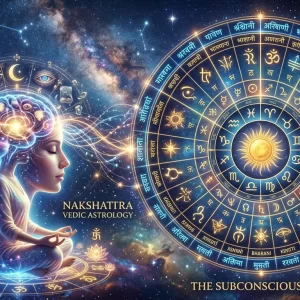
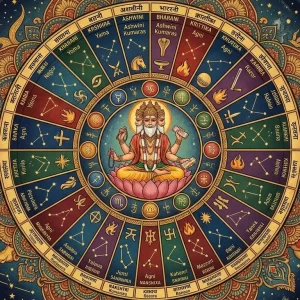
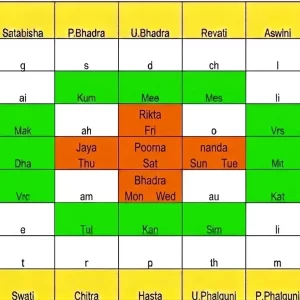
In Indian tradition, Pauranik legends and Vrat Kathas (ritual stories) are far more than simple moral fables—they act as symbolic blueprints encoding deep astronomical and astrological wisdom. Long before charts and manuals were accessible to everyone, ancient seers wove the traits, planetary rulerships, and karmic lessons of the 27 Nakshatras (lunar mansions) directly into vivid narratives about gods, sages, and devotees. you can read more about importance of nakshatras in astrology from the following link- https://learnwithneeraj.com/astrology/vedic-astrology/nakshatras-the-real-vedic-astrology-part-1
Every detail in these stories—from the temperament of a deity to the specific day, fasting rule, or offering prescribed in a Vrat Katha—mirrors the energy of a particular star cluster. For example:
- 🌙 Mythological allegories: The famous legend of Chandra (the Moon) and his 27 wives (the daughters of Daksha) isn’t just a tale of cosmic favoritism; it explains the Moon’s cyclic transit through each Nakshatra and why certain lunar phases carry distinct emotional or spiritual weight.
- 🪔 Ritual symbolism: A Vrat Katha associated with a specific Nakshatra—such as Rohini or Shravana—often prescribes remedies, charities, and behavioral disciplines that naturally pacify the ruling deity and balance that Nakshatra’s shadow traits in a person’s chart.
By listening to or reciting these stories with awareness, a seeker absorbs the psychological and spiritual essence of the stars effortlessly, turning everyday devotion into a quiet, living practice of Jyotish.
Labh Chaturthi
Labh Chaturthi (also known as Varad Chaturthi or Labh Chauth) is an auspicious Hindu observance dedicated to Lord Ganesha. Particularly significant in Gujarat and western India, it falls during the closing stretch of the Diwali festivities—one day before the more widely known Labh Panchami—and marks a time for praying for prosperity (labh), honest livelihood, and the smooth reopening of business and work for the new year.
Labh Chaturthi is celebrated on the Chaturthi (fourth) tithi of the Kartik Shukla Paksha (the waxing phase of the moon in the month of Kartik).
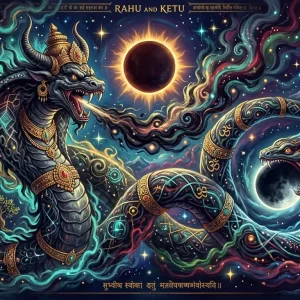
On this specific day, the Moon 🌙 always transits through the Moola Nakshatra ⭐. This consistent alignment is why the mythological stories associated with the day are deeply connected to the characteristics of the Moola Nakshatra, which is governed by the deity Nirriti and the planet Ketu ☋.
Astrological & Panchang Snapshot
| Astrological Attribute | Details & Symbols |
| 🗓️ Hindu Lunar Month | Kartik (October – November in the English calendar) |
| 🌗 Paksha & Tithi | Shukla Paksha (Waxing Moon) – Chaturthi (4th Lunar Day) |
| 🌙 Moon’s Nakshatra | ⭐ Moola Nakshatra (Sagittarius / Dhanu Rashi ♐) |
| 🪐 Ruling Planet | ☋ Ketu (South Node of the Moon) |
| 🔱 Presiding Deities | 🐘 Lord Ganesha (Festival) & Nirriti (Nakshatra Deity) |
The Legend of King Sudhanva (Katha)
In ancient times, there lived a virtuous, valiant, and prosperous king named Sudhanva, who ruled righteously alongside his devoted queen, Kalavati. Despite his generosity toward guests and Brahmins, King Sudhanva was suddenly afflicted with severe leprosy, forcing him to leave his palace and wander in the forest while meditating on Lord Ganesha.
| Story Stage & Symbol | Katha Narrative | ⭐ Moola Nakshatra & ☋ Ketu Interpretation |
| 👑 1. A Prosperous Ruler | King Sudhanva was a powerful and wealthy monarch, often compared to Kubera (the god of wealth) for his immense prosperity. | Moola natives are often content and well-established on the material plane before spiritual shifts occur. |
| ⚡ 2. The Sudden Affliction | In his middle age, despite all his success, the King was struck by a severe form of leprosy. He exhausted all medical, ritualistic, and spiritual remedies, but none succeeded. | Moola natives are often pushed by sudden, upheaval-like events to look past material success and search for higher truth. |
| 🌲 3. Self-Exile | Unable to find a cure, he handed over his kingdom to his ministers and retreated into the forest with his wife, Kalavati. | Depending on planetary placements in Moola, individuals may walk away from their current status or responsibilities, entrusting them to others to seek wisdom. |
| 🧘 4. The Sage’s Revelation | In the forest, he met Sage Pulastya, who revealed that his suffering arose from inadvertently stopping his sacred observance of the Chaturthi fast. | Represents the Ketu ☋ energy of detachment and karmic resolution. Because the oversight was born of ignorance rather than malice, transition and transformation are possible. |
| 🕉️ 5. The Remedy | Sage Pulastya advised the King to worship Lord Ganesha and chant the Ashtakshari mantra, “Om Ganeshaya Namah”. | Moola natives find healing and alignment by embracing spiritual practices and higher principles to clear past karmic debts. |
| 🌅 6. Restoration | Through diligent practice, King Sudhanva was cured of his leprosy and returned to govern his kingdom with renewed divine favor. | Moola natives can reclaim their external roles and responsibilities, now enriched with a deeper understanding of the divine order. |
you can learn more about moola nakshatra from the following video—https://www.youtube.com/watch?v=xTX7o67YcwA
Key Takeaways & Summary
Essence of the Katha
Pauranik Vrat Kathas translate complex Jyotish alignments into lived devotion—showing how Ketu’s uprooting energy in Moola Nakshatra ultimately leads to spiritual clarity and restored prosperity through Lord Ganesha’s grace.
- Living Jyotish: Pauranik stories and Vrat Kathas encode the psychological traits, planetary rulers, and karmic remedies of the 27 Nakshatras.
- 🗓️ Auspicious Timing: Labh Chaturthi falls on Kartik Shukla Chaturthi (October–November) and honors Lord Ganesha for obstacle-free prosperity.
- 🌙 Moola & Ketu Alignment: The Moon’s transit through Moola Nakshatra (ruled by Ketu ☋ and Nirriti) mirrors King Sudhanva’s journey—moving from material attachment through sudden upheaval into spiritual detachment, mantra sadhana, and rightful restoration.
Enjoyed this article?
Get notified when the next one is published.
We send one email per new article — no spam, unsubscribe any time.
⚠️ Disclaimer: The information provided on LearnWithNeeraj.com regarding Astrology, Numerology, and other topics is for educational and guidance purposes only.
Not Professional Advice: This content should not be used as a substitute for professional medical, legal, or financial advice. Always consult a certified professional for specific concerns.
Guest Authors: This site features articles by various contributors. The views and interpretations expressed are those of the individual authors and do not necessarily reflect the views of the website administrator.
Your destiny is in your hands. Use this information as a map, not a mandate.